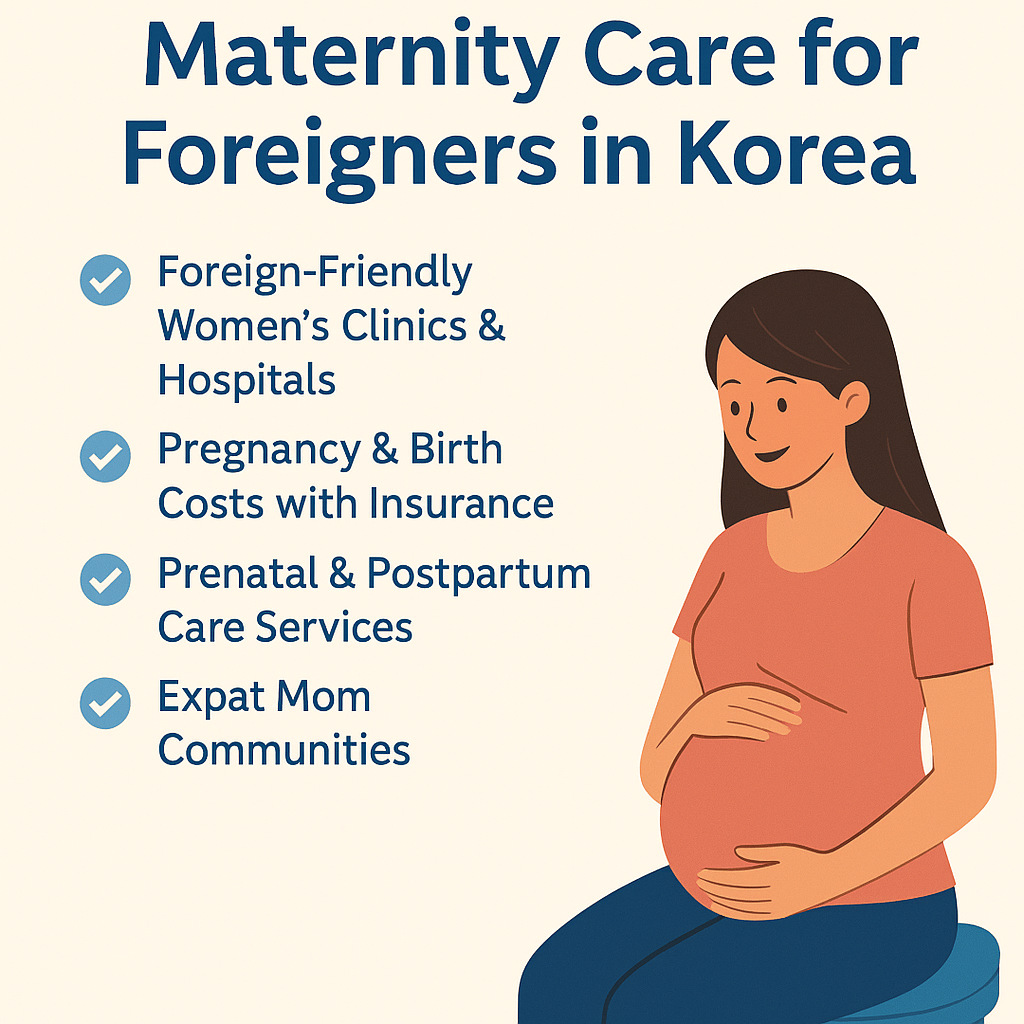
Are you expecting a baby in South Korea? Congratulations — and welcome to one of the most advanced medical systems in Asia. But if you’re a foreigner, navigating pregnancy and childbirth in Korea can be confusing.
From finding an English-speaking OB/GYN to understanding insurance coverage and delivery costs, there are many details that are rarely explained clearly.
This guide covers everything you need to know, whether you're an expat mom-to-be, an international couple, or a traveler who unexpectedly needs prenatal care.
1. Is Korea a Good Place to Give Birth?
Yes. South Korea has:
- Modern hospitals and clinics with advanced medical equipment
- Low maternal mortality rate
- High hygiene and safety standards
- Excellent prenatal and postnatal care programs
The challenge is usually not medical quality, but communication and system navigation for non-Korean speakers.
2. Finding an OB/GYN in Korea
Most Korean women visit OB/GYN (산부인과) clinics from the early stages of pregnancy. These clinics offer:
- Ultrasound exams
- Blood tests
- Fetal monitoring
- Nutritional advice
🏥 Popular Clinics with English Support in Seoul
✅ MizMedi Women’s Hospital (Gangseo, Seoul)
https://www.mizmedi.com
✅ CHA Fertility Center & Women’s Hospital (Gangnam)
https://www.chamc.co.kr
✅ Mirae Women's Hospital (Jamsil)
https://www.miraeobgy.co.kr
✅ Gangnam Yonsei OB/GYN Clinic
https://www.gsobgyn.co.kr
📌 Tip: Search “산부인과 영어” or “OBGYN English Seoul” on Naver Maps for more options.
📍 In Busan, Daegu, Daejeon
- Haeundae Paik Hospital (Busan) – Foreign services available
- Daegu Fatima Hospital (Daegu) – Women’s clinic with English nurses
- Eulji University Hospital (Daejeon) – University-level care
3. Insurance Coverage for Pregnancy & Childbirth
✅ National Health Insurance (NHI)
If you’re enrolled in NHI (Alien Registration Card + 6+ months residency), you get:
- Coverage for regular prenatal checkups
- Ultrasound exams partially covered (some may be private)
- Hospital delivery: Partially covered depending on type
- Postpartum care (limited, some services not covered)
❌ What is NOT Covered
- Private room upgrades
- Epidural in some hospitals
- Non-essential testing (NIFTY, gender test, etc.)
- Postnatal luxury care (산후조리원)
💳 Maternity Voucher (고운맘카드)
- NHI members get a ₩1,000,000 government subsidy (as of 2024)
- Can be used for prenatal visits, delivery costs
- Apply at NHIS office or bank (Woori, KB, etc.)
4. How Much Does Giving Birth Cost in Korea?
ServiceWith InsuranceWithout Insurance
| Prenatal Checkup (per visit) | ₩10,000–₩30,000 | ₩70,000–₩150,000 |
| Ultrasound (1 time) | ₩30,000–₩70,000 | ₩90,000–₩180,000 |
| Normal Delivery (2-night stay) | ₩500,000–₩1,200,000 | ₩2M–₩4M |
| Cesarean Section | ₩1M–₩1.5M | ₩3M–₩5M |
| Epidural | ₩100,000–₩250,000 | Not always covered |
| Sanhujoriwon (Postnatal center) | Not covered | ₩2M–₩4M (2 weeks) |
🧾 Tip: Always ask for itemized cost estimate before delivery.
5. Giving Birth in Korea: Step-by-Step
- Confirm pregnancy at OB/GYN
- Enroll in NHI and apply for maternity voucher
- Schedule monthly checkups (move to weekly after 36 weeks)
- Choose delivery hospital (clinic vs. hospital)
- Register at hospital ~32 weeks
- Discuss delivery plan (natural, C-section, epidural, etc.)
- Pack hospital bag + maternity docs by week 36
- Go to ER or labor ward when contractions begin
📌 Korean hospitals are very systematic — delivery rooms are clean, staff are well-trained, but English communication can be limited.
6. What Documents Do You Need?
- ARC (Alien Registration Card)
- NHI Card (건강보험증)
- Maternity Booklet (issued at OB clinic)
- Pregnancy medical records (printed or mobile app)
- Goounmom Card (고운맘카드) for insurance payment
7. What is a “Sanhujoriwon” (Postpartum Care Center)?
These are popular luxury facilities where moms recover after birth. Services include:
- Daily baby care
- Postnatal massage
- Healthy Korean meals
- Lactation consulting
Cost: ₩2M–₩4M for 2 weeks (not covered by insurance)
Recommended centers:
- CHA Sanhujoriwon (Seoul)
- MizMedi Sanhujoriwon (Gangseo)
- Mom’s Touch Center (Busan)
🧠 These are optional but highly valued in Korean culture.
8. Expat Communities for Expecting Mothers
Online Groups
- Every Expat in Korea (Facebook)
- Korea Moms Network (KakaoTalk open chat)
- Mommy Korea Forum
Offline Events
- Seoul Global Center hosts pregnancy info sessions
- Private hospitals offer prenatal yoga and English birthing classes
🧸 Tip: Don’t go through this journey alone — other expat moms are your best resource.
9. Language Tips for Pregnancy & Birth
| English | Korean (Romanized) |
| I am pregnant | 임신했어요 (imshin-haesseoyo) |
| I want natural delivery | 자연분만 하고 싶어요 (jayeon bunman hago sipeoyo) |
| Is an epidural available? | 무통주사 받을 수 있나요? (mutong jusa badeul su innayo?) |
| I have contractions | 진통이 있어요 (jintong-i isseoyo) |
| Where is the delivery room? | 분만실 어디예요? (bunmanshil eodieyo?) |
| Please call someone for help | 도와줄 사람 불러 주세요 (dowajul saram bulleo juseyo) |
10. Final Thoughts: Giving Birth in Korea as a Foreigner
South Korea offers excellent maternal care, but navigating the system as a foreigner takes preparation.
From finding the right doctor to understanding your insurance, knowledge is power.
You deserve a safe, comfortable, and empowering birth experience — and with the resources in this guide, you’re well on your way.
💙 Don’t be afraid to ask questions, seek out English-speaking clinics, and connect with other moms.
Good luck on your journey to parenthood in Korea!
The Foreigner’s Guide to Mental Health Support in Korea
Living abroad is exciting — but it can also be stressful, isolating, and emotionally challenging. Whether you’re an international student, expat, digital nomad, or long-term resident in South Korea, accessing mental health care can feel overwhelming. L
particleseoul.tistory.com
The Foreigner's Guide to Dental Care in Korea: Implants, Scaling, and Insurance Explained
Visiting the dentist in a foreign country can be stressful. You're unsure what procedures are covered by insurance, how much they cost, and whether you can even communicate with the staff. If you're living in or visiting Korea, this guide will walk you thr
particleseoul.tistory.com
The Ultimate Guide to Booking Hospital Appointments in Korea (Without Making a Phone Call!)
South Korea has a world-class healthcare system, but booking a doctor’s appointment can be overwhelming if you're a foreigner. Between language barriers, cultural differences, and unfamiliar procedures, many expats or travelers find themselves stuck tryi
particleseoul.tistory.com
The Complete Guide to Using Pharmacies in Korea for Foreigners
South Korea is known for its excellent healthcare system, but for many foreigners living or traveling here, using a pharmacy can be one of the more confusing experiences. Language barriers, unfamiliar drug names, and different regulations make even buying
particleseoul.tistory.com
Best Korean Cafés in Singapore for K-POP Fans
Introduction: Experience Seoul in SingaporeK-POP fans in Singapore don’t have to fly to Korea to experience the Korean café culture. Whether you're looking for a BTS-themed café, a place with authentic Korean desserts, or a cozy café playing the lates
particleseoul.tistory.com
How to Secure K-Pop Concert Tickets in the UK – A Survival Guide for Fans
IntroductionK-Pop concerts in the UK have become one of the most difficult tickets to secure, with BTS, SEVENTEEN, TWICE, and STRAY KIDS selling out venues like Wembley Arena and The O2 within minutes. The demand for K-Pop concert tickets in London and oth
particleseoul.tistory.com


